Avocado Tree Pollination in Southern California: How It Impacts Growth and Fruit Production
Avocado tree pollination is one of the most misunderstood factors affecting fruit production in Southern California. Many property owners assume that poor yield is related to watering, soil, or fertilizer, when in reality the issue often stems from incomplete or inefficient pollination.
Even healthy looking avocado trees can fail to produce fruit if the pollination process is not functioning properly. Understanding how pollination works is essential for improving yield, maintaining tree health, and maximizing the long term value of the tree.
At CalEco Arborists, pollination issues are frequently identified during tree health assessments, especially in cases where trees appear stable but underperform.
How Avocado Tree Pollination Works
Avocado trees have a unique flowering system that differs from most other fruit trees. Each flower opens twice during its life cycle and functions as both female and male at different times. This process is known as dichogamy and is designed to encourage cross pollination between trees.
Because of this timing, a single tree often cannot pollinate itself effectively. Instead, successful pollination typically depends on the presence of another avocado tree with a complementary flowering cycle. Without this interaction, many flowers fail to develop into fruit.
This is one of the primary reasons why avocado trees may look healthy but produce little to no yield.
Type A and Type B Avocado Trees
Avocado trees are categorized into two groups based on their flowering patterns. Type A trees open their flowers as female in the morning and then reopen as male the following afternoon. Type B trees follow the opposite pattern, functioning as male in the morning and female in the afternoon.
When both types are present in close proximity, their flowering cycles overlap in a way that significantly improves pollination success. This interaction increases the likelihood that flowers will be fertilized and develop into fruit.
In many residential settings, only one tree is planted, which limits this natural process and reduces productivity. Identifying the type of tree and understanding its pollination behavior is a critical step in improving performance.
Why Pollination Affects Tree Health and Yield
Pollination is not only important for fruit production, but it also reflects the overall health and functionality of the tree. When pollination is ineffective, the tree expends energy producing flowers that never develop into fruit. Over time, this can contribute to stress and reduced vitality.
Poor pollination often leads to inconsistent fruit yield, smaller fruit size, and excessive flower drop. These issues are frequently misattributed to nutrient deficiencies or irrigation problems, which can result in incorrect treatments.
A proper tree health assessment helps determine whether pollination is the limiting factor and ensures that any corrective action is based on accurate diagnosis.
The Role of Pollinators in Avocado Production
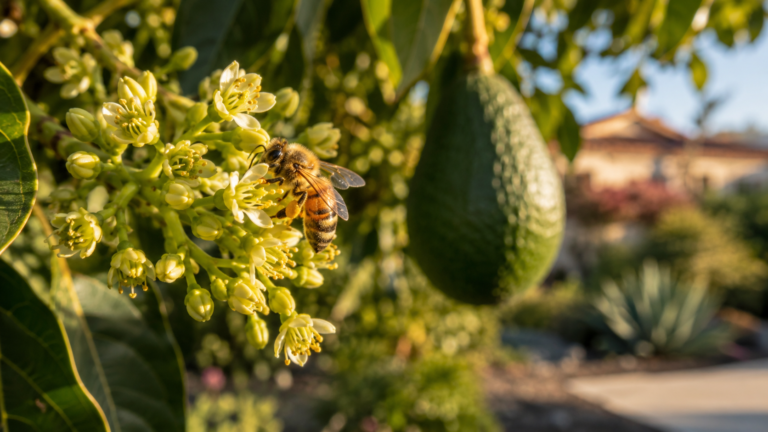
Pollinators play a critical role in the success of avocado tree pollination. Bees are the primary agents responsible for transferring pollen between flowers, making their presence essential for fruit development.
In urban environments, pollinator activity is often reduced due to limited plant diversity and the use of chemicals that affect insect populations. Without sufficient pollinator activity, even well positioned trees may struggle to produce fruit.
Environmental conditions also influence pollination success. Temperature, wind, and humidity can all affect how flowers open and how effectively pollen is transferred. When these conditions are unfavorable, pollination rates can drop significantly.
Common Pollination Problems in Southern California
Pollination challenges in Southern California are often the result of environmental and structural factors rather than a single cause. Trees that are planted in isolation, without a complementary pollinator, are less likely to produce consistent yields. Similarly, trees that are spaced too far apart may not benefit from effective pollen transfer.
Urban landscapes can also limit pollination due to reduced bee activity and lack of supporting vegetation. In addition, improper tree placement, excessive shade, or poor airflow can interfere with flowering cycles and reduce pollination efficiency.
These issues often go unnoticed because the tree itself may appear healthy, making it difficult to identify pollination as the root cause without professional evaluation.
Improving Avocado Tree Pollination
Improving pollination begins with understanding the specific conditions affecting the tree. In many cases, introducing a complementary avocado variety nearby can significantly increase fruit production by supporting cross pollination.
Encouraging pollinator activity is another important factor. Creating an environment that supports bees and other beneficial insects can enhance natural pollination processes. This often involves maintaining a diverse landscape with flowering plants and minimizing the use of harmful chemicals.
Maintaining overall tree health is equally important. Healthy trees produce stronger flowers that are more likely to be successfully pollinated. This requires proper irrigation, soil management, and regular monitoring for stress factors that may interfere with flowering.
The Connection Between Pollination and Tree Health
Pollination issues are often linked to broader tree health conditions. A tree that is under stress from poor soil, root damage, or improper watering may produce fewer viable flowers, reducing the chances of successful pollination.
Similarly, pest infestations and diseases can interfere with the reproductive process, further limiting fruit development. This is why pollination should always be evaluated as part of a comprehensive tree health assessment rather than as an isolated issue.
At CalEco Arborists, we examine all contributing factors to ensure that the underlying cause is properly identified and addressed.
When to Work With a Consulting Arborist
If an avocado tree is not producing fruit despite appearing healthy, it is often a sign that a deeper issue is present. A consulting arborist can evaluate pollination conditions, assess environmental factors, and determine whether structural or biological issues are affecting the tree.
Professional evaluation is especially important for property owners and developers who rely on consistent tree performance. Accurate diagnosis allows for targeted solutions that improve both yield and long term health.
Long Term Strategies for Better Fruit Production
Achieving consistent avocado production requires a long term approach that focuses on stability and balance. Regular tree inspections help identify changes early, allowing for timely adjustments to care practices.
Proper pruning supports airflow and light penetration, which improves flowering conditions. Soil management ensures that roots remain healthy and capable of supporting the tree’s growth. Consistent irrigation maintains the balance needed for both flowering and fruit development.
When these elements are aligned, pollination becomes more effective, and the tree is able to produce fruit more consistently over time.
Why Choose CalEco Arborists
CalEco Arborists specializes in consulting based tree care that focuses on accurate diagnosis and long term results. Our approach is designed to identify the factors limiting tree performance and provide practical solutions that improve both health and productivity.
We provide comprehensive tree health assessments, pollination evaluations, and arborist reports that support informed decision making. Every recommendation is based on a detailed understanding of tree biology and environmental conditions.
Final Thoughts
Avocado tree pollination is a critical factor that directly impacts fruit production and overall tree performance. While many trees appear healthy, they may still underperform due to incomplete pollination or unfavorable environmental conditions.
Understanding how pollination works and addressing the factors that influence it can significantly improve yield and long term tree health. For property owners in Southern California, working with a professional arborist ensures that these issues are properly evaluated and managed.