

Tree Protection During Construction in Southern California: How to Prevent Damage and Avoid Costly Mistakes
Tree protection during construction is one of the most critical yet often overlooked aspects of development in Southern California. While construction projects focus on buildings, grading, and infrastructure, nearby trees are frequently impacted in ways that are not immediately visible. Damage to trees during construction can lead to long term decline, structural instability, and significant liability if not properly managed.
Many trees that fail after construction were not damaged suddenly, but gradually weakened during the building process. Without proper protection, root systems can be compromised, soil conditions altered, and overall tree health permanently affected.
At CalEco Arborists, construction tree protection is approached as a proactive process that ensures trees are preserved, risks are minimized, and compliance requirements are met.
Why Tree Protection During Construction Matters
Construction activity introduces a range of stress factors that directly impact trees. Excavation, grading, trenching, and heavy equipment can disrupt soil structure and damage roots, which are essential for stability and nutrient absorption.
Unlike visible damage to branches or trunks, root damage often goes unnoticed. Trees may appear healthy immediately after construction, only to decline months or years later as the effects of root loss become evident.
Protecting trees during construction not only preserves their health but also helps avoid future costs related to removal, replacement, or liability from failure.
How Construction Impacts Tree Health
Trees rely on a delicate balance between roots, soil, and environmental conditions. Construction disrupts this balance in several ways. Soil compaction caused by heavy equipment reduces oxygen availability, making it difficult for roots to function properly. Changes in grading can alter drainage patterns, leading to either excess moisture or drought conditions.
Root systems are particularly vulnerable during trenching and excavation. Even minor cuts to critical roots can destabilize the tree and reduce its ability to absorb water and nutrients. Because most roots exist near the surface, they are easily damaged during routine construction activities.
Over time, these impacts can lead to canopy thinning, branch dieback, and increased susceptibility to pests and disease.
Common Tree Protection Failures
One of the most common mistakes in construction projects is underestimating the importance of tree protection. Trees are often treated as obstacles rather than assets, leading to inadequate planning and protection measures.
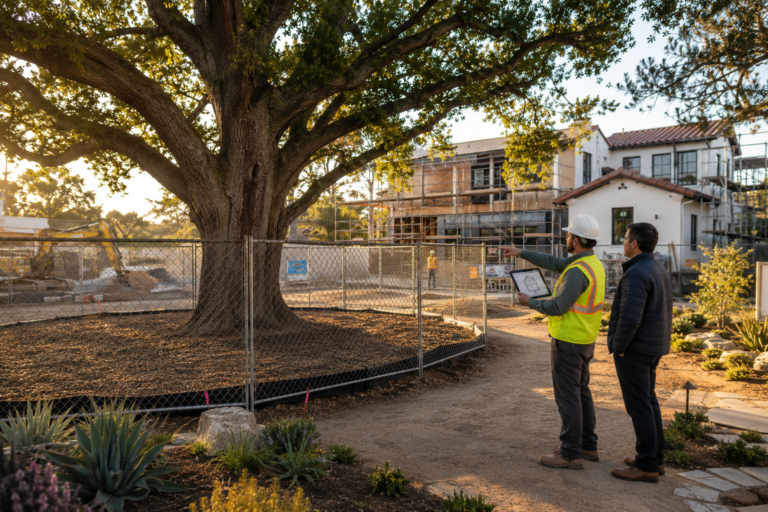
In many cases, protective barriers are either not installed or placed too close to the trunk, failing to protect the critical root zone. Construction crews may store materials, park equipment, or operate machinery within this area, causing compaction and root damage.
Another frequent issue is the lack of coordination between contractors and arborists. Without clear guidelines and oversight, even well intentioned projects can result in significant tree damage.
What a Tree Protection Plan Includes
A proper tree protection plan outlines the steps necessary to preserve trees throughout the construction process. This plan is typically developed by a consulting arborist and tailored to the specific conditions of the site.
The plan identifies the location of trees, the extent of their root zones, and the areas that must remain undisturbed. It also specifies protective measures such as fencing, signage, and restrictions on construction activity within designated zones.
In addition to physical protection, the plan may include recommendations for irrigation adjustments, soil management, and monitoring throughout the project. These measures help maintain tree health despite the surrounding disruption.
Tree Protection and City Regulations
In many Southern California municipalities, tree protection is not just a best practice but a regulatory requirement. Cities often require arborist reports and tree protection plans as part of the permitting process for construction projects.
Failure to comply with these requirements can result in delays, fines, or additional costs. More importantly, inadequate protection can lead to tree loss, which may require replacement or mitigation measures.
Working with a consulting arborist ensures that all regulatory requirements are met and that documentation is properly prepared for submission.
The Role of Arborist Reports in Construction
Arborist reports play a key role in construction planning and compliance. These reports provide a detailed evaluation of existing trees, including their condition, location, and potential impact from the project.
They also include recommendations for protection measures and may be required by cities before permits are approved. In addition to regulatory use, these reports help developers and property owners make informed decisions about site design and tree preservation.
At CalEco Arborists, arborist reports are prepared with a focus on accuracy and clarity, ensuring that all stakeholders have the information needed to move forward confidently.
Long Term Impact of Construction Damage
Tree damage during construction often has delayed effects. Trees that appear stable immediately after a project may begin to decline over time as the impact of root loss and soil changes becomes more apparent.
This delayed response can make it difficult to connect the decline to the original construction activity. However, the long term consequences can include reduced lifespan, increased maintenance costs, and higher risk of failure.
Preventing damage during construction is far more effective than attempting to correct it afterward. A proactive approach protects both the tree and the investment in the property.
When to Involve a Consulting Arborist
A consulting arborist should be involved as early as possible in the construction planning process. Early involvement allows for better integration of tree protection measures into the project design.
Arborists can identify which trees are suitable for preservation, recommend adjustments to minimize impact, and develop a protection plan that aligns with construction goals. They also provide ongoing monitoring to ensure that protection measures are followed throughout the project.
At CalEco Arborists, our role is to bridge the gap between development and tree preservation, ensuring that both objectives are achieved.
Why Work With CalEco Arborists
CalEco Arborists specializes in consulting based tree care with a focus on construction projects and risk management. Our approach ensures that trees are properly evaluated and protected throughout the development process.
We provide tree protection plans, arborist reports, and on site consulting that supports compliance and long term tree health. Every recommendation is based on a detailed understanding of how construction impacts trees and how those impacts can be minimized.
Final Thoughts
Tree protection during construction is essential for preserving tree health, avoiding costly mistakes, and meeting regulatory requirements. While trees may seem resilient, the impacts of construction can be significant and long lasting if not properly managed.
By planning ahead and working with a professional arborist, property owners and developers can protect their trees while ensuring that projects move forward smoothly.
In Southern California, where trees are both valuable and vulnerable, proactive protection is the key to long term success.