California Avocado Trees: Complete Guide to Growth, Care, and Common Problems
California avocado trees are one of the most recognizable and valuable tree species across Southern California. Their ability to produce high value fruit while maintaining an evergreen presence makes them a popular choice for residential properties, commercial landscapes, and agricultural operations. However, despite the favorable climate, avocado trees are highly sensitive to environmental conditions and require careful management to remain healthy and productive.
At CalEco Arborists, we frequently evaluate avocado trees that appear visually healthy but are underperforming due to hidden stress factors. Understanding how these trees grow and what they require is essential for maintaining long term health and consistent fruit production.
Why California Supports Avocado Tree Growth
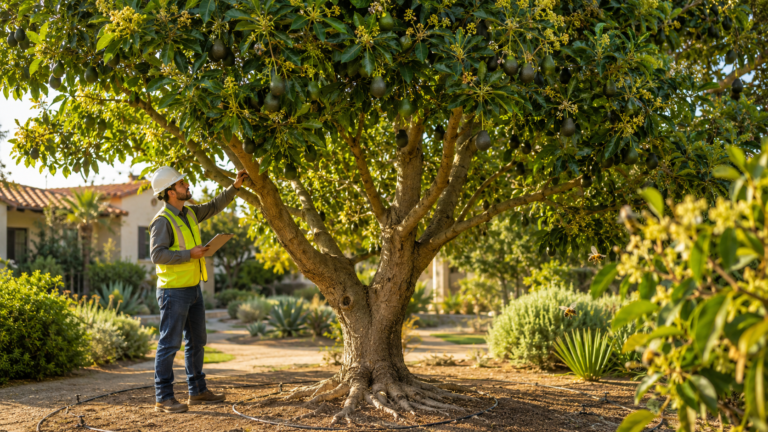
California provides a Mediterranean climate that is ideal for avocado cultivation. Mild winters, warm summers, and consistent sunlight create an environment where avocado trees can thrive. The extended growing season allows trees to develop steadily while supporting both flowering and fruit production cycles.
However, these advantages can be misleading in urban environments. Soil disturbance, irrigation inconsistencies, and construction related impacts often disrupt the natural balance that avocado trees depend on. As a result, trees that should thrive may instead struggle without clear signs of immediate decline.
Understanding Avocado Tree Varieties in California
Not all avocado trees behave the same way. The variety of the tree plays a significant role in how it grows, produces fruit, and responds to environmental stress.
Hass avocado trees are the most common in California due to their high yield and commercial value. They are known for consistent fruit production and durability, but they still require proper care to maintain performance. Fuerte avocado trees, which produce fruit earlier in the season, are slightly more sensitive to temperature changes and environmental stress. Other varieties such as Bacon and Zutano are often used to support pollination and can improve overall productivity when planted strategically.
Knowing the type of avocado tree on a property allows for more accurate care strategies, particularly when it comes to irrigation, pruning, and pollination support.
Soil Conditions and Root Health
One of the most important factors in avocado tree health is soil quality. Avocado trees require well draining soil to prevent root damage. In Southern California, heavy clay soils are common and can retain excess moisture, creating conditions that lead to root rot.
When soil becomes compacted or poorly drained, oxygen levels decrease and roots begin to deteriorate. This process often occurs below the surface, making it difficult to detect until visible symptoms appear in the canopy. Trees may begin to show signs such as yellowing leaves, reduced growth, or general decline, even though the root system is the primary issue.
Improving soil conditions is essential for supporting root health and ensuring that the tree can properly absorb water and nutrients.
Irrigation and Water Management
Water management is one of the most common challenges with avocado trees in Southern California. Both overwatering and underwatering can cause significant stress, and many property owners unintentionally contribute to tree decline through improper irrigation practices.
Overwatering can saturate the soil and create anaerobic conditions, which lead to root rot and structural instability. On the other hand, insufficient watering can cause drought stress, resulting in leaf drop, reduced fruit production, and overall weakening of the tree.
A balanced irrigation strategy must take into account soil type, climate conditions, and the specific needs of the tree. Consistency is critical, as irregular watering patterns can disrupt the tree’s natural processes.
Sunlight, Temperature, and Environmental Stress
Avocado trees require full sunlight to support healthy growth and fruit development. However, extreme heat can create additional stress, particularly in urban environments where reflective surfaces and limited shade increase temperature exposure.
Heat stress can cause leaf burn, fruit drop, and increased water demand. Over time, repeated exposure to high temperatures weakens the tree and makes it more vulnerable to pests and disease.
Managing environmental stress involves a combination of proper irrigation, soil care, and strategic placement to ensure that the tree can withstand seasonal changes.
Common Problems With California Avocado Trees
Even in optimal conditions, avocado trees are prone to several common issues that affect performance and longevity. One of the most frequent concerns is root rot, which develops when soil remains too wet for extended periods. This condition damages the root system and limits the tree’s ability to function properly.
Another common issue is low or inconsistent fruit production. Many trees fail to produce fruit not because they are unhealthy, but because pollination is not occurring effectively. This is especially common when only one type of avocado tree is present or when environmental conditions interfere with the pollination process.
Pest activity is also a growing concern in Southern California. Insects such as shot hole borers and scale insects can weaken trees over time, particularly when combined with environmental stress. These pests often go unnoticed until damage becomes more severe.
Maintenance Strategies for Healthy Avocado Trees
Maintaining avocado tree health requires a proactive approach that focuses on long term stability rather than short term fixes. Regular inspections play a key role in identifying early signs of stress before they develop into larger problems. A professional tree inspection provides insight into structural integrity, root health, and potential environmental issues.
Pruning is another important aspect of maintenance. When done correctly, it improves airflow, increases light penetration, and supports balanced growth. This not only enhances the appearance of the tree but also reduces the risk of disease and structural failure.
Soil management remains a critical component of tree care. Ensuring that the soil supports healthy root development allows the tree to access nutrients efficiently and maintain stability over time. Combined with a well designed irrigation plan, this creates the foundation for consistent growth and fruit production.
The Role of Professional Tree Assessments
Many avocado tree problems are not immediately visible, which is why professional evaluation is essential. A consulting arborist provides a comprehensive assessment that goes beyond surface level observations. This includes analyzing soil conditions, evaluating root systems, and identifying environmental stress factors that may be affecting the tree.
At CalEco Arborists, our assessments are designed to provide clear and actionable recommendations. Whether the goal is to improve fruit production, address declining health, or evaluate risk, every assessment is based on accurate diagnosis and practical solutions.
Tree Preservation and Long Term Value
Avocado trees represent a significant investment, both in terms of time and value. Preserving these trees whenever possible is often the preferred approach, particularly when issues are identified early and can be corrected.
However, there are situations where removal becomes necessary. Trees that pose a safety risk or have advanced structural damage may no longer be viable. Determining the right course of action requires a careful evaluation of the tree’s condition and the surrounding environment.
A consulting arborist ensures that these decisions are based on objective analysis rather than assumptions.
Why Work With CalEco Arborists
CalEco Arborists specializes in consulting based tree care that focuses on accuracy, risk management, and long term results. Our approach is centered on understanding the unique conditions that affect each tree and providing solutions that address those specific challenges.
We provide detailed tree health assessments, irrigation analysis, pest and disease evaluation, and arborist reports for legal and insurance purposes. Every recommendation is designed to support both tree preservation and property protection.
Final Thoughts
California avocado trees have the potential to thrive in Southern California, but they require careful management to reach their full potential. From soil conditions to irrigation and pollination, every factor plays a role in determining overall health and productivity.
By taking a proactive approach and working with a professional arborist, property owners can ensure that their trees remain healthy, productive, and structurally sound for years to come.