Tree Damage Assessment in Southern California: How to Evaluate Risk, Loss, and Next Steps
Tree damage can occur suddenly or develop over time, but in either case, it creates uncertainty for property owners. Whether caused by storms, construction activity, pests, or disease, damaged trees require careful evaluation to determine the extent of the problem and the appropriate course of action.
In Southern California, where trees are often located close to homes, vehicles, and public spaces, damage is not just a maintenance issue. It is a safety concern and, in many cases, a legal and financial matter.
At CalEco Arborists, tree damage assessment focuses on identifying the true extent of damage, evaluating structural integrity, and providing clear recommendations that protect both the tree and the property.
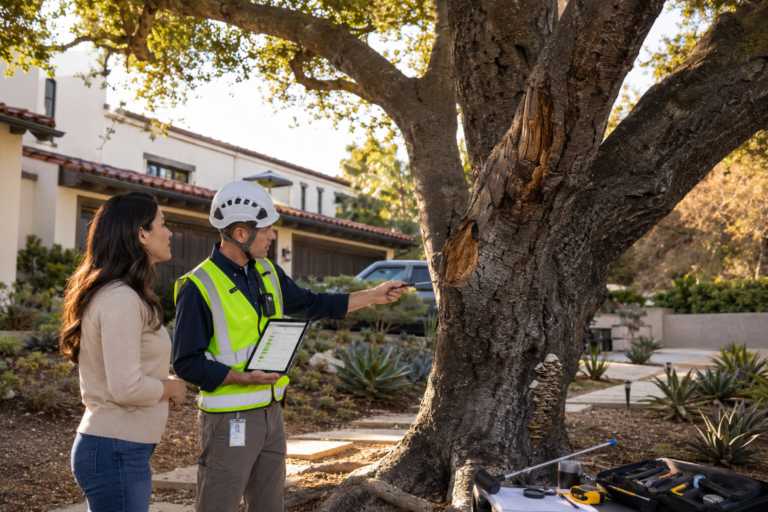
What Is a Tree Damage Assessment
A tree damage assessment is a professional evaluation of a tree that has been affected by external or internal stress. This process involves determining how the damage impacts the tree’s health, structure, and long term stability.
Unlike a basic inspection, a damage assessment focuses specifically on identifying the cause of the issue and measuring its severity. This includes evaluating visible damage such as broken branches or trunk wounds, as well as hidden issues like internal decay or root system disruption.
The goal is to provide a clear understanding of whether the tree can be preserved, requires treatment, or needs to be removed due to safety risks.
Common Causes of Tree Damage
Tree damage in Southern California can result from a variety of factors, many of which are not immediately obvious. Environmental conditions such as high winds and extreme heat can place stress on trees, leading to branch failure or structural weakness over time.
Construction activity is another major cause of damage. Excavation, grading, and heavy equipment can disturb root systems, compact soil, and alter drainage patterns. These changes often lead to gradual decline that becomes visible months or even years later.
Pest infestations and disease can also weaken trees from the inside, making them more susceptible to damage. In some cases, improper pruning or maintenance practices contribute to structural issues that increase the likelihood of failure.
Understanding the cause of damage is essential for determining the appropriate response.
Visible vs Hidden Tree Damage
One of the challenges in tree damage assessment is distinguishing between visible damage and underlying structural issues. While broken branches and surface wounds are easy to identify, they do not always represent the full extent of the problem.
Hidden damage, such as internal decay or compromised roots, can significantly affect the stability of the tree without obvious external signs. A tree may appear intact while being structurally weakened from within.
This is why professional evaluation is critical. A comprehensive assessment considers both what is visible and what may be occurring beneath the surface.
How Tree Damage Affects Structural Integrity
Damage to a tree often impacts its structural integrity, which directly affects safety. When the trunk, branches, or root system are compromised, the tree becomes less stable and more likely to fail.
Even minor damage can create weak points that worsen over time. Cracks in the trunk, for example, may expand under stress, while damaged roots may no longer provide adequate support.
As structural integrity declines, the risk of falling branches or complete tree failure increases. This is particularly concerning in areas where trees are located near structures or high traffic zones.
Tree Damage and Property Liability
Tree damage is closely tied to liability, especially when it creates a potential hazard. If a damaged tree fails and causes injury or property damage, the property owner may be held responsible if it is determined that the issue could have been identified and addressed earlier.
A professional tree damage assessment provides documented evidence of the tree’s condition and the steps taken to manage risk. This documentation can be critical in insurance claims or legal situations.
Proactive assessment helps protect property owners by demonstrating that the tree was properly evaluated and managed.
When a Damaged Tree Can Be Saved
Not all damaged trees need to be removed. In many cases, trees can recover if the damage is limited and the underlying structure remains intact. Proper treatment, including pruning, soil improvement, and ongoing monitoring, can restore health and stability.
The ability to preserve a tree depends on the severity of the damage and its impact on critical structures such as the trunk and root system. Early intervention increases the likelihood of successful recovery.
A consulting arborist evaluates these factors to determine whether preservation is a viable option.
When Tree Removal Is Necessary
There are situations where damage is too severe to safely preserve the tree. Trees with extensive internal decay, major structural defects, or compromised root systems may pose a significant risk.
If the likelihood of failure is high, removal becomes the safest option. This is especially important for trees located near homes, roads, or areas with frequent activity.
Making the decision to remove a tree should always be based on a thorough assessment rather than assumptions.
The Role of Professional Arborist Reports
In many cases, tree damage assessments require formal documentation. Arborist reports provide detailed findings that can be used for insurance claims, legal disputes, or permitting requirements.
These reports include an evaluation of the damage, the condition of the tree, and recommended actions. They serve as an objective record that supports decision making and helps resolve conflicts.
At CalEco Arborists, reports are prepared with a focus on accuracy and clarity, ensuring that clients have the information they need to move forward.
Long Term Impact of Tree Damage
Tree damage can have lasting effects if not properly addressed. Even when immediate risks are managed, underlying issues may continue to affect the tree’s health over time.
Monitoring and follow up assessments are often necessary to ensure that the tree remains stable. Preventive care, including proper pruning and soil management, helps reduce the likelihood of future damage.
A long term approach to tree care ensures that both the tree and the property are protected.
Why Work With CalEco Arborists
CalEco Arborists specializes in consulting based tree care with a focus on damage assessment and risk management. Our approach is designed to provide a complete understanding of each situation, allowing for informed and effective decisions.
We provide detailed tree damage assessments, arborist reports, and expert recommendations that prioritize safety and long term outcomes. Every evaluation is based on a thorough analysis of the tree and its environment.
Final Thoughts
Tree damage assessment is essential for protecting both trees and property in Southern California. Whether damage is caused by environmental factors, construction, or biological stress, understanding its impact is critical for determining the right course of action.
By working with a professional arborist, property owners can ensure that damage is properly evaluated and managed, reducing risk and preserving long term value.