

Tree Risk Assessment in Southern California: How to Identify Hazards Before They Become Liability
Tree risk assessment is one of the most important services property owners can invest in, especially in Southern California where trees exist in close proximity to buildings, walkways, and high traffic areas. While trees add value and beauty to a property, they can also become serious hazards if their structural integrity is compromised.
Many trees that appear healthy on the surface may have internal decay, root instability, or structural defects that are not immediately visible. Without proper evaluation, these hidden issues can lead to unexpected failure, resulting in property damage or personal injury.
At CalEco Arborists, tree risk assessment focuses on identifying potential hazards early and providing clear recommendations that reduce liability and protect both people and property.
What Is a Tree Risk Assessment
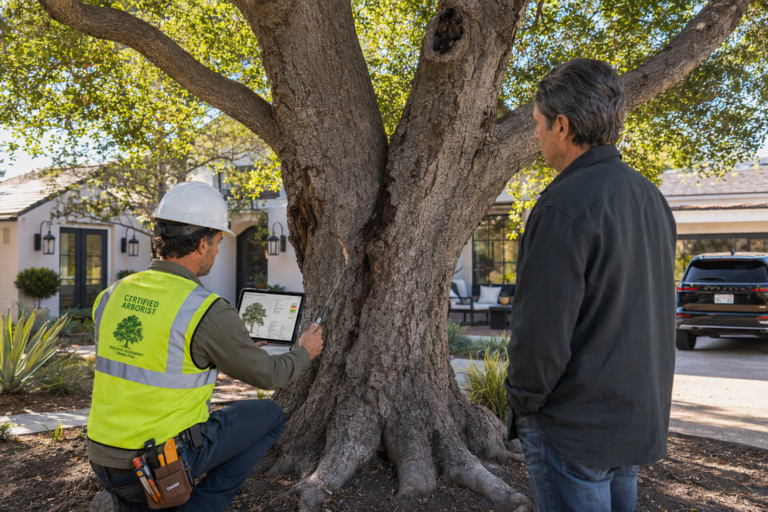
A tree risk assessment is a professional evaluation of a tree’s structural condition and the likelihood that it may fail. This process goes beyond basic visual inspection and involves analyzing multiple factors that contribute to stability and safety.
The goal is to determine whether a tree poses a risk and, if so, what level of action is required. This may include monitoring, corrective pruning, structural support, or removal depending on the severity of the issue.
A proper assessment provides property owners with documented findings that support informed decision making and long term planning.
Why Tree Risk Assessment Is Critical
Tree failures rarely occur without warning. In most cases, there are underlying conditions that weaken the tree over time. These conditions may include internal decay, root damage, or structural imbalances that develop gradually.
Without regular assessment, these issues can go unnoticed until failure occurs. This creates a significant safety concern, particularly in urban environments where trees are located near homes, vehicles, and public spaces.
In Southern California, property owners may be held liable if a tree causes damage and it is determined that the risk could have been identified earlier. A professional tree risk assessment helps reduce this liability by documenting the condition of the tree and identifying necessary actions.
Common Risk Factors in Trees
Tree risk is influenced by a combination of structural, environmental, and biological factors. One of the most common issues is internal decay, which weakens the tree from the inside while leaving the exterior relatively unchanged. This makes it difficult to detect without professional evaluation.
Root damage is another major factor. Construction activity, soil compaction, and improper irrigation can compromise the root system, reducing stability and increasing the likelihood of failure. Because roots are below the surface, damage is often not visible until the tree begins to lean or decline.
Structural defects such as cracks, weak branch unions, and uneven weight distribution can also increase risk. These conditions may develop over time or result from improper pruning practices.
Environmental stress, including high winds, drought, and extreme heat, further contributes to instability. When combined with existing weaknesses, these factors can trigger sudden failure.
How Tree Risk Is Evaluated
A professional tree risk assessment involves a detailed analysis of the tree and its surroundings. The process begins with a visual inspection of the canopy, trunk, and root zone to identify visible defects or signs of stress.
This is followed by a closer evaluation of structural integrity, including checking for decay, cracks, and weak attachment points. Soil conditions and drainage are also assessed, as they play a critical role in root health and stability.
In some cases, advanced diagnostic tools may be used to detect internal decay or structural weaknesses that are not visible externally. These tools provide additional insight into the condition of the tree and help refine the assessment.
The final step involves determining the level of risk and providing recommendations based on the findings.
Levels of Tree Risk and Recommended Actions
Not all tree risks require immediate removal. In many cases, risks can be managed through proper maintenance and monitoring. A tree with minor structural issues may only require pruning or periodic evaluation to ensure that conditions do not worsen.
Moderate risk situations may involve corrective measures such as reducing canopy weight, improving soil conditions, or installing support systems. These actions help stabilize the tree and reduce the likelihood of failure.
High risk trees, particularly those with advanced decay or compromised root systems, may require removal to eliminate the hazard. The key is determining the appropriate response based on the level of risk and the potential impact.
Tree Risk and Property Liability
Tree risk assessment is closely tied to liability, especially for property owners in urban areas. A tree that fails and causes damage can result in legal and financial consequences if it is determined that the risk was preventable.
Having a documented tree risk assessment provides evidence that the tree was evaluated and that appropriate steps were taken. This can be critical in situations involving insurance claims or legal disputes.
Proactive assessment not only improves safety but also protects property owners from potential liability.
When to Schedule a Tree Risk Assessment
Tree risk assessments should be conducted regularly, especially for mature trees or those located near structures and high traffic areas. Certain situations make assessment particularly important, such as after severe weather, during property transactions, or before construction projects.
Trees that show signs of decline, leaning, or structural damage should be evaluated as soon as possible. Early assessment allows for timely intervention and reduces the likelihood of failure.
Routine evaluation is one of the most effective ways to maintain safety and stability over time.
Long Term Risk Management Strategies
Managing tree risk is an ongoing process that involves regular monitoring and maintenance. Healthy trees are less likely to develop structural issues, making proactive care an essential part of risk reduction.
Proper pruning helps maintain balanced structure and reduces stress on branches. Soil management supports root health and stability, while consistent irrigation prevents conditions that can weaken the tree.
By addressing potential issues early and maintaining overall tree health, property owners can significantly reduce risk and extend the lifespan of their trees.
Why Work With CalEco Arborists
CalEco Arborists specializes in consulting based tree care with a focus on risk assessment and safety. Our approach is built on accurate evaluation and detailed analysis of each tree’s condition.
We provide comprehensive tree risk assessments, arborist reports, and recommendations that support informed decision making. Every assessment is designed to identify hazards, reduce liability, and protect property.
Final Thoughts
Tree risk assessment is an essential part of responsible property management in Southern California. While trees provide significant benefits, they also require careful evaluation to ensure they remain safe and stable.
By identifying potential hazards early and taking appropriate action, property owners can prevent damage, reduce liability, and maintain the long term value of their landscape.
Working with a professional arborist ensures that these decisions are based on accurate information and expert guidance.