Tree Disease and Pest Diagnosis in Southern California: How to Identify and Protect Your Trees
Tree disease and pest infestations are among the most common causes of tree decline in Southern California. While many issues begin subtly, they often develop into serious structural and safety concerns if not properly identified early. The difficulty lies in the fact that many symptoms appear similar on the surface, even when the underlying cause is completely different. This is why accurate diagnosis is critical.
At CalEco Arborists, tree disease diagnosis is not based on assumptions. It is a detailed evaluation of environmental conditions, structural integrity, and biological stressors that affect long term tree health.
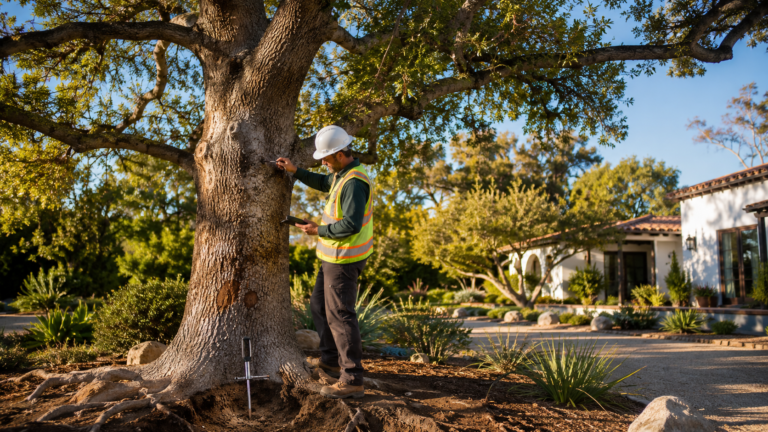
Why Tree Disease and Pest Diagnosis Matters
Trees rarely fail without warning. Most failures occur after prolonged exposure to stress caused by pests, disease, or poor environmental conditions. When these issues are not correctly diagnosed, they continue to progress beneath the surface, weakening the tree over time.
This often results in reduced lifespan, compromised structural integrity, and increased risk of property damage. In many cases, what begins as a minor issue can escalate into a hazardous situation that exposes property owners to liability.
A professional tree health assessment ensures that the true cause of decline is identified before decisions are made. This prevents unnecessary treatments and protects the long term value of the tree.
Common Tree Pests in Southern California
Southern California’s climate supports a wide range of tree pests that can affect both residential and commercial landscapes. Among the most damaging are shot hole borers, which penetrate the bark and introduce fungal pathogens into the tree’s vascular system. This disrupts nutrient flow and often leads to branch dieback and eventual structural failure.
Other common pests include scale insects and aphids, which feed on sap and weaken the tree gradually. These pests often leave behind a sticky residue that leads to secondary issues such as mold growth. Over time, this weakens the tree’s ability to photosynthesize effectively.
Beetles and wood boring insects present another significant threat. By tunneling into trunks and branches, they create internal damage that is not immediately visible. This hidden decay increases the risk of sudden failure, especially during high winds or environmental stress.
Common Tree Diseases in Southern California
Tree diseases are often more difficult to detect than pest infestations because they typically develop internally before visible symptoms appear. Fungal infections are particularly common and can compromise the structural integrity of a tree long before outward signs become obvious. Discoloration, decay, and abnormal growth patterns are often late stage indicators.
Root rot is another major concern in Southern California, particularly in areas with poor drainage or overwatering. When roots remain saturated for extended periods, oxygen levels decrease and decay begins. This weakens the foundation of the tree and can eventually lead to instability or collapse.
Bacterial diseases, while less common, can still affect tree health by causing leaf damage, branch dieback, and reduced growth. These conditions often require careful evaluation to distinguish them from environmental stress factors.
Why Early Detection Is Critical
One of the most important aspects of tree care is identifying problems early. Subtle changes such as leaf discoloration, canopy thinning, or minor dieback are often the first indicators of a larger issue. These early symptoms are frequently overlooked or misinterpreted, allowing the problem to worsen.
By the time visible damage becomes severe, treatment options may be limited or significantly more costly. Early detection allows for targeted intervention, which can often preserve the tree and prevent long term damage.
This is why routine tree inspections are essential, especially in environments where trees are exposed to ongoing stress.
The Challenge of Accurate Diagnosis
Accurate tree diagnosis is complex because many conditions share similar symptoms. Yellowing leaves, for example, could be caused by nutrient deficiency, root damage, pest infestation, or overwatering. Without a comprehensive evaluation, it is nearly impossible to determine the correct cause.
Similarly, branch dieback may result from drought stress, internal decay, or insect activity. Fungal growth on the exterior of a tree may be harmless in some cases but could also indicate severe internal deterioration.
A certified arborist evaluates all contributing factors, including soil conditions, irrigation patterns, structural integrity, and environmental influences. This holistic approach ensures that the diagnosis is accurate and that any recommended treatment addresses the root cause rather than just the symptoms.
Tree Risk and Safety Considerations
Tree disease and pest damage often weaken structural integrity, creating safety risks that are not always immediately visible. A tree that appears stable may already have internal decay or compromised roots, increasing the likelihood of failure.
This can lead to falling branches, trunk collapse, or root instability, all of which pose risks to people and property. In Southern California, property owners can be held responsible if a hazardous tree causes damage and it is determined that the issue could have been identified earlier.
A professional tree risk assessment evaluates these factors and provides documented findings that help reduce liability and support informed decision making.
Treatment and Long Term Prevention
Effective treatment begins with accurate diagnosis. Once the underlying issue is identified, a targeted plan can be developed to address the problem and prevent recurrence. This may involve improving irrigation practices, enhancing soil conditions, or implementing pest management strategies.
Long term prevention focuses on maintaining overall tree health. Healthy trees are naturally more resistant to pests and disease, making proactive care one of the most effective strategies. This includes consistent watering practices, proper pruning, and ongoing monitoring for early signs of stress.
Rather than reacting to visible damage, a proactive approach ensures that trees remain stable, healthy, and structurally sound over time.
When to Work With a Consulting Arborist
If a tree shows signs of decline or unusual behavior, professional evaluation is essential. A consulting arborist provides a detailed assessment that goes beyond surface level observations. This includes identifying the cause of the issue, evaluating structural risk, and recommending appropriate solutions.
At CalEco Arborists, our approach is centered on accuracy and long term results. Whether the concern involves disease, pests, or structural integrity, every evaluation is designed to provide clear guidance and reliable solutions.
Why CalEco Arborists
CalEco Arborists specializes in consulting based tree care with a focus on precision and risk reduction. Our services are designed to support property owners, developers, and municipalities in maintaining safe and healthy landscapes.
We provide comprehensive tree health assessments, detailed arborist reports, and expert guidance for managing tree related risks. Every recommendation is based on data, experience, and a deep understanding of tree biology and environmental conditions.
Final Thoughts
Tree disease and pest infestations are serious issues that require careful attention. While many problems begin quietly, they can escalate quickly if not properly diagnosed.
The key to protecting your trees is early detection and accurate evaluation. By understanding the true cause of decline, it becomes possible to implement effective solutions that preserve tree health and reduce risk.
For property owners in Southern California, working with a professional arborist is one of the most important steps in maintaining a safe and valuable landscape.